

Though Procurement literature often touches on the ways that teams can teach and mold vendors to maximize the value of their relationships, many Procurement professionals still struggle with the operationalization of this practice. Often, these professionals reference this type of organizational learning as a component of the Strategic Procurement model. This concept of collaborative, mutual learning, however, goes back quite a bit farther, finding its roots in an innovation of ancient Greece.
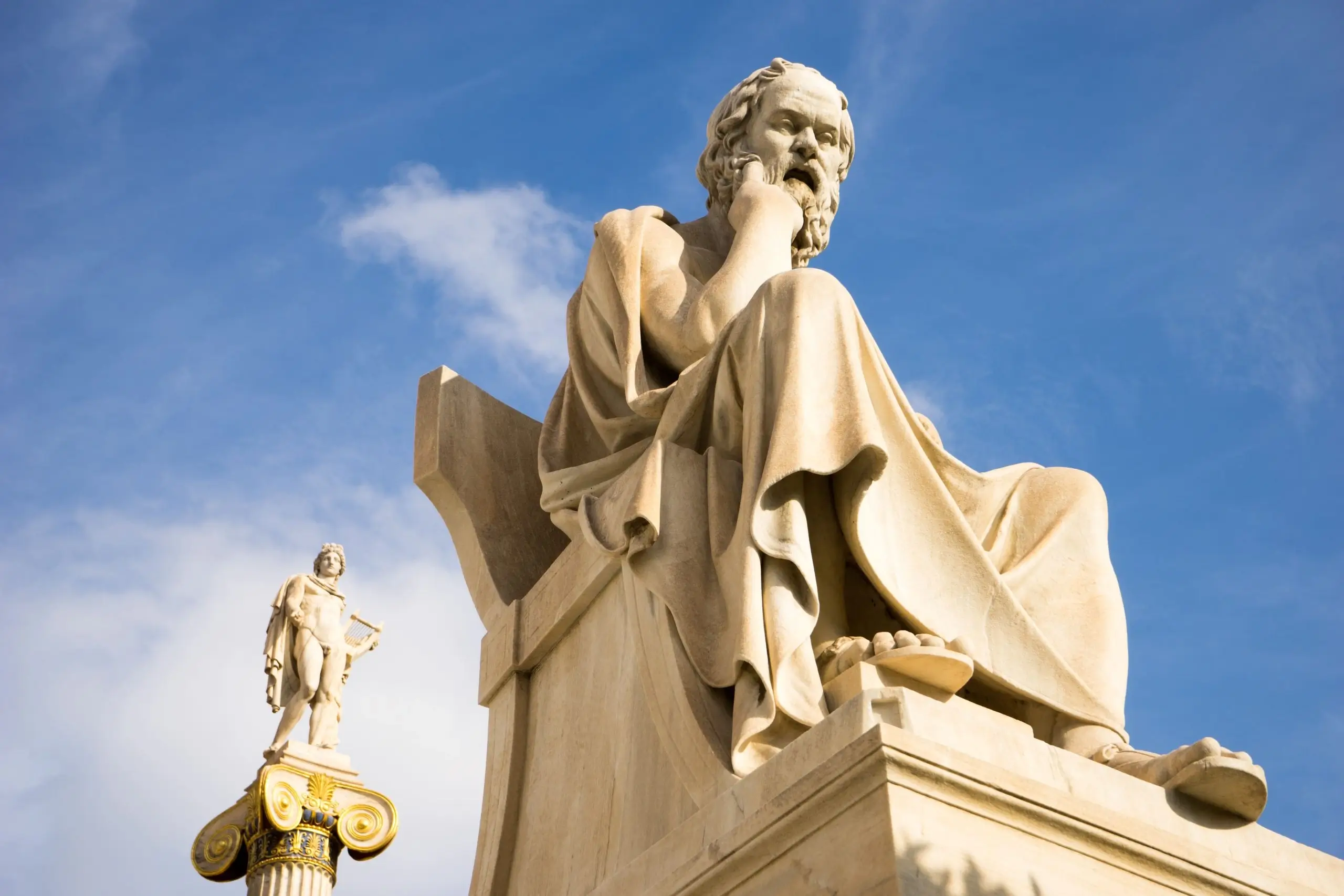
Persuasion is, perhaps, the oldest form of teaching – it’s also an activity we know all too well in the Procurement field. Around 1500 years ago in ancient Greece, some of the first recorded educators, the Sophists, used a method of teaching in which they would attempt to persuade students to accept their views and determinations as fact. The celebrated educator Socrates, however, radically challenged their methods and ushered in a new era of teaching. Remembered as a father of modern education, Socrates’ alternative to the limited and deterministic teaching method of the Sophists has come to be known as the Socratic Method and is based on the facilitation of critical thinking and learning through a constructive series of dialogues based on the question-and-answer format. This teaching method is still used to this day in classrooms across the globe.
From the Procurement perspective, Socrates’ innovation can be conceptualized and applied in three primary ways:
Sourcing
In the context of an RFP process (formal or informal), Procurement professionals often profess an understanding of the ways critical vendors can contribute domain expertise, generally in a limited, strategic sense. Though it may seem like vendors often fit this mode, it is important to think about whether we are persuading them to fit a specific mold or engaging in a more interrogative dialogue to determine their true capabilities. In the case of an outsourcing exercise, for example, it is entirely possible a sophisticated vendor will be able to surpass best-practices outlined in our RFP – so we must remember that there is a balance to be struck between standardizing for efficiency (persuading vendors to be what we want) and allowing room for vendors to begin a dialogue that may teach us what we need, even if we do not yet know we need it. Keeping an open mind enables the Procurement professional and vendor to effectively synergize.
Negotiations
Negotiations, often categorized as “more art than science,” are an important aspect of Procurement work for which preparation, research, and structure are necessary for success. However, a common trap laid by this very necessity is that of the desire to avoid perceived ‘wastes’ by religiously adhering to the negotiation structures and predetermined strategies we have devised. An even simpler trap is treating negotiation and persuasion as synonymous – this is an understandable, but flawed colloquial understanding, as there are many forms and aspects of persuasion. Just as a professor must keep in mind the core items he or she wishes to teach as they instruct students, similarly, a Procurement negotiator can utilize information as a tool in a negotiation for which their preparation and strategy have already determined a desired outcome. The Socratic Method can aid us in addressing these issues by incorporating simple questions that help a vendor see the Procurement perspective. We can introduce helpful dialogue, for example: “In my position, how would you feel about your RFP proposal?” or “Do you feel as though your true capabilities have been represented in our conversations?” – not only can such questions throw a negotiation counterpart off balance, but they can also uncover new information about their strengths and capabilities.
Relationship Management
In the case of vendor Relationship Management, particularly for strategic vendors who should be considered partners, persuasion can often take the form of utilization rather than integration. Leveraging the skillsets of strategic vendors generates value in many traditional ways, such as P&L savings, contracted lead times, or simply increased service levels. These traditional value streams tend to be easily quantifiable, something that cannot be said for true collaboration. The Procurement drive for quantifiable results and love of positive, efficient vendors often leads to strategic vendors being utilized as simple ‘machines’ producing a desired product or outcome. A huge amount of the less-quantifiable value provided by such partners lies in their ability to join blended, interorganizational teams, wherein they can share their expertise and methods with those willing to learn. Again, Socrates’ method can inform this issue, as all that is required to capture additional value is willingness on the part of internal teams to ask questions and utilize the answers and subsequent dialogue to the end of joint innovation, either through knowledge-share mechanisms, or truly cross-functional team outputs.
In closing, one of the best ways we can ensure that our Procurement team’s and firm’s best interests are truly at the heart of our everyday Procurement work is to ensure that we facilitate a culture of learning, questioning, and constructive dialogue in the same vein as the Socrates once did, rather than settling for the inferior persuasive methods of the Sophists. From the moment we identify a potential vendor, to the point at which they have become a valued partner, and beyond, the responsibility for enabling and fostering such productive dialog rests with Procurement.